Current Courses
PI Ethan Linck teaches the following undergraduate and graduate courses at MSU:
BIOB480 / BIOE548: Conservation Genetics
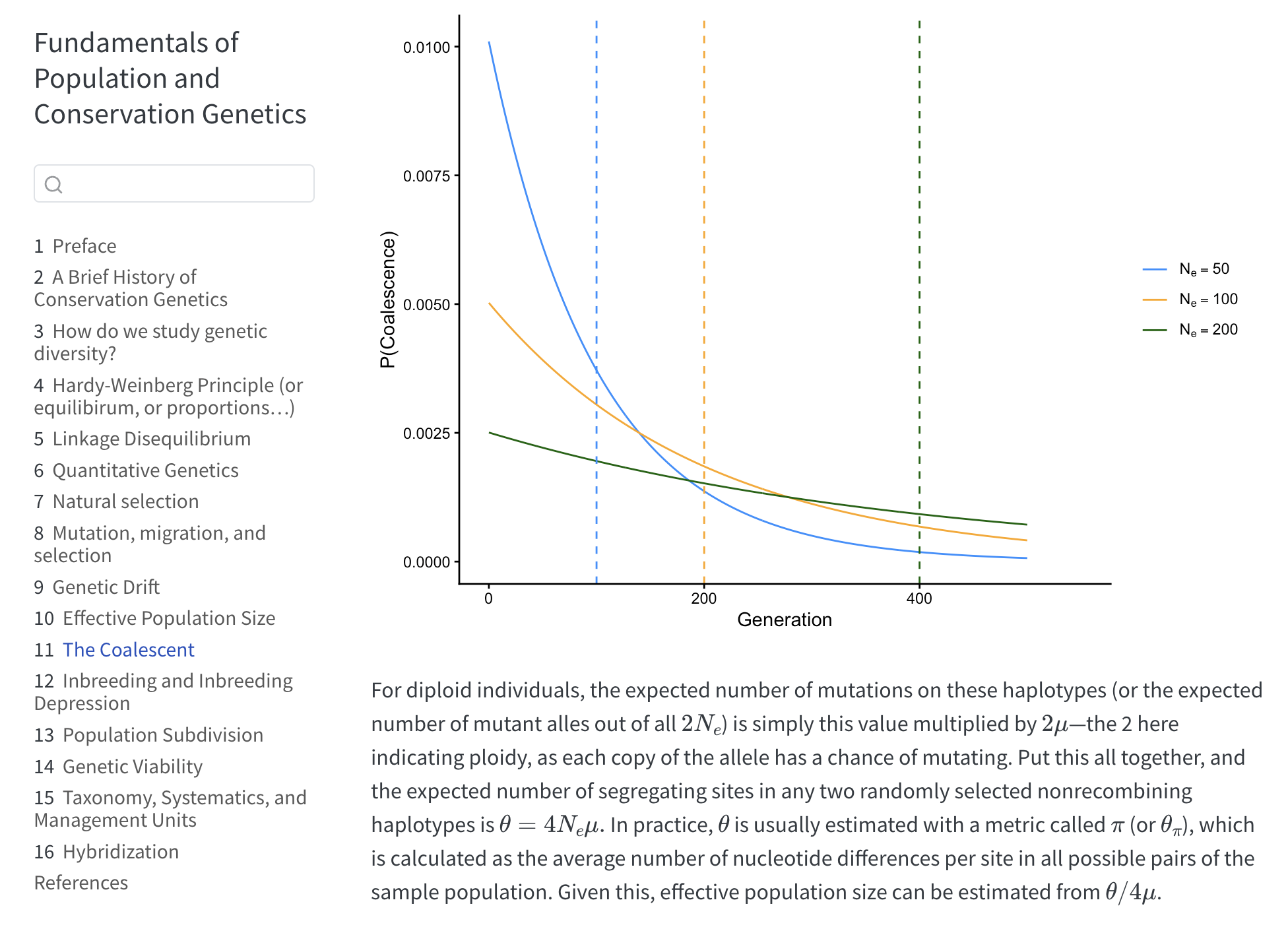
Conservation genetics is a relatively young discipline that merges population and evolutionary genetics with conservation biology. It aims to delimit the basic units of biological conservation and understand how their genetic composition is affected by habitat loss, exploitation, and environmental change. This course provides an introduction to its theory and practice. We will work through important concepts in conservation genetics, pairing a survey of foundational mathematical models with empirical examples and reviews from the primary literature. Coursework will include problem sets that will require students to interpret genetic data and use quantitative reasoning, regular discussion of scientific articles, and a group presentation on a research project of interest.
BIO0470: Ornithology
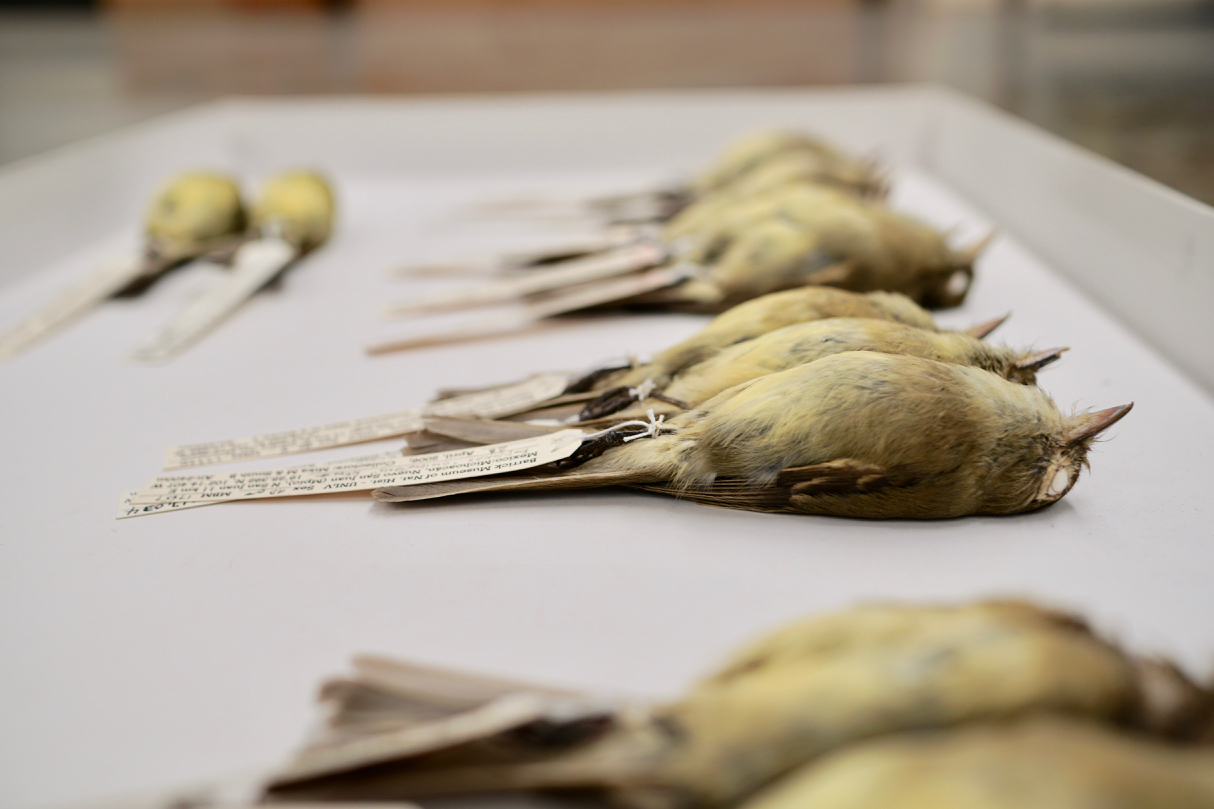
Birds are among the most familiar groups of organisms. This course covers the evolution, functional biology, distribution, and classification of birds. Lecture topics will include an overview of avian diversity and taxonomy, characteristic adaptations, life history, and reproduction. Labs will focus on morphological features and visual and audial identification of common Montana species. Taught Fall semester.
BIOE548: Genomics for Ecology and Conservation
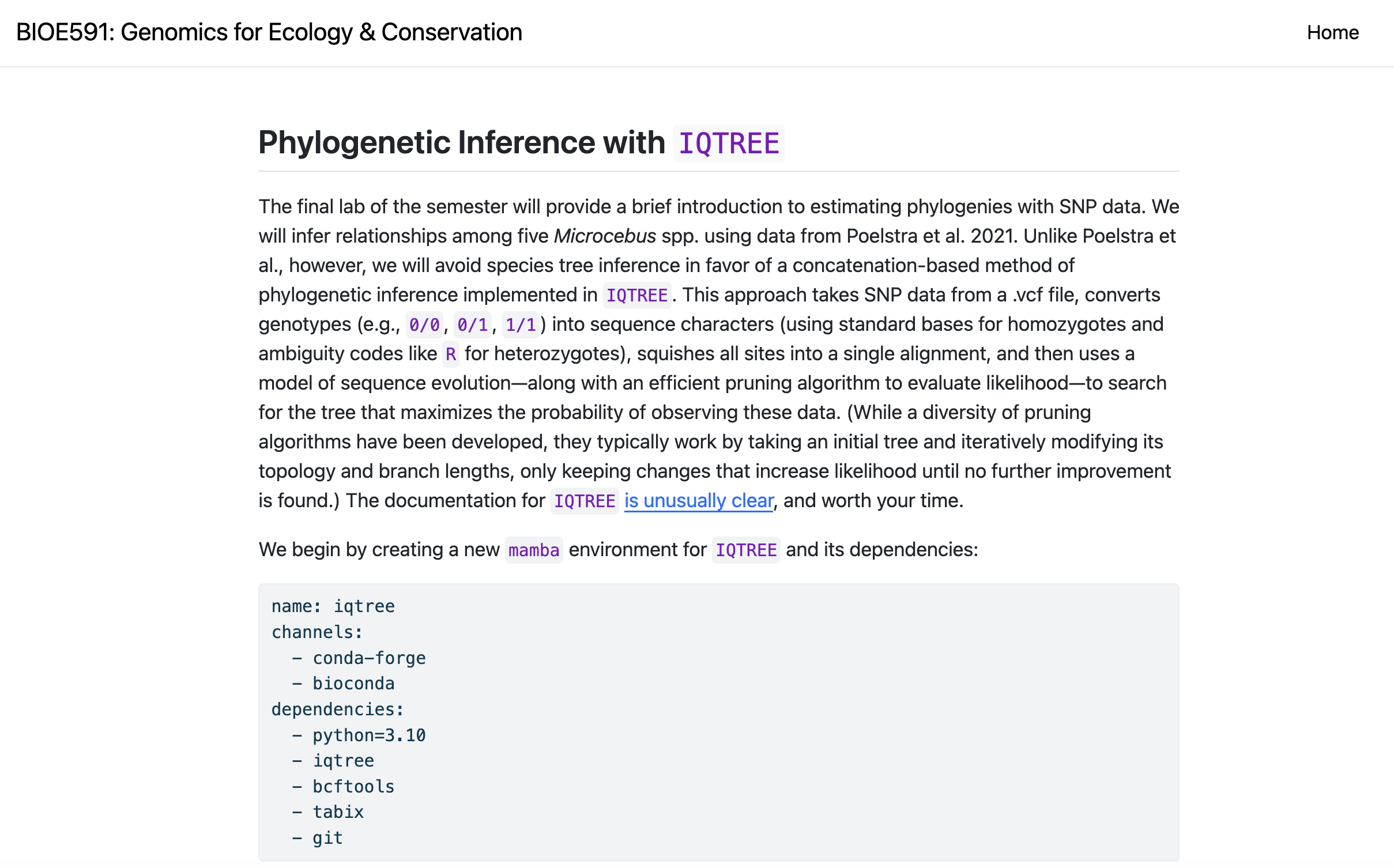
The development of affordable high-throughput sequencing technology in the 2000s and 2010s revolutionized the ability of molecular ecologists, wildlife and conservation biologists, and other environmental scientists to assay genome-wide DNA sequence variation from nonmodel organisms. Genomics methods are now commonly used to study everything from the dietary preferences of sturgeon to genes underpinning local adaptation in wolves, but can be difficult to apply or interpret without specialist training. This course provides a hands-on introduction to the use of genomics in ecology, conservation, and related fields. Students will gain hands-on experience with computational biology, analyzing empirical genomic datasets with commonly applied software on a high-performance computing cluster. Reading assignments from the primary literature will demonstrate the use of focal software packages while emphasizing case studies relevant to conservation biology and fish and wildlife management. Taught even-year Spring semesters.
Previous Courses
BIOB170: Principles of Biological Diversity.
This course examines the biology, ecology, and evolutionary relationships among living organisms. All forms of life will be considered, from single celled prokaryotes to multicellular eukaryotic plants and animals. (Co-taught in Fall 2023 and Spring 2024, delivering the Diversity & Organismal Biology unit.)